
The vine’s life cycle: from dormancy to harvest
The vine’s life cycle dictates the entire wine production process. From winter dormancy to harvest, each year the vine goes through a series of specific physiological stages that determine the yield, the quality of the grapes, and the profile of the wines.Cultivated for thousands of years, vines follow an unchanging annual vegetative cycle that is closely dependent on climatic conditions. Understanding this cycle is essential to understanding grape formation and the balances that shape each vintage.
The vine: a perennial plant with an annual cycle
Cultivated vines mainly belong to the Vitis vinifera species. They are woody vines capable of living for several decades, sometimes more than a century in certain wine-growing regions.
Its development is based on two time frames: an annual vegetative cycle, which repeats itself every year, and a long life cycle, from planting to uprooting. The annual cycle is what directly determines the production of the vintage.
The annual vegetative cycle of the vine
Winter dormancy: vegetative rest
In winter, the vine enters dormancy. After the leaves fall in autumn, physiological activity slows down significantly. The sap descends to the woody parts and roots, where the plant stores its energy reserves.
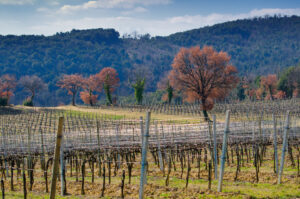
This period of rest is essential. It allows the vine to replenish its resources before restarting in spring. It is also during this phase that winter pruning takes place, a crucial operation that structures the future architecture of the vine and regulates the number of buds. Dormancy ends when temperatures rise steadily at the end of winter.
Bud break: the awakening of the vine
In spring, generally between March and April depending on the region, the buds swell and then open: this is bud break. This stage marks the beginning of the new growing cycle. Young shoots appear and growth becomes rapid as soon as temperatures exceed around 10°C. Bud break is a phase that is particularly sensitive to climatic hazards. The young tissues are fragile and can be seriously affected by late frosts. The success of this stage determines the potential harvest, as each bud carries the future grapes.
Shoot growth and the appearance of inflorescences
After bud break, the vine enters a phase of active growth. The branches lengthen, the leaves develop, and photosynthesis intensifies.
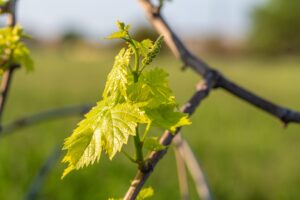
This is when the inflorescences, the plant structures that will give rise to the bunches, become visible. Their number and vigor are linked to the climatic conditions of the previous year, as the flower buds form upstream in the buds. This phase prepares for flowering, a key stage in the cycle.
Flowering: a decisive stage
Flowering generally occurs between May and June. It lasts only a few days but plays a fundamental role. The vine flowers, which are discreet and greenish in color, open and are then fertilized. This fertilization determines the number of berries that will make up each cluster. Stable weather conditions—moderate heat, light wind, no rain—promote uniform flowering. In the event of adverse weather conditions, phenomena such as coulure (the dropping of unfertilized flowers) or millerandage (berries of irregular sizes) may occur, directly affecting the final yield.
Fruit set: the formation of berries
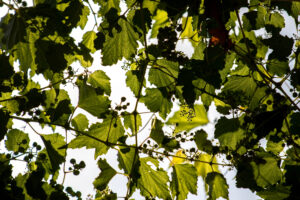
Following fertilization, the flowers turn into young green fruits: this is fruit set. The berries begin to develop gradually. During this phase, the vine naturally adjusts its load according to its capacity. The balance between vegetative vigor and cluster development is essential to ensure harmonious ripening. The grapes remain green and rich in organic acids.
Veraison: the beginning of ripening
Veraison marks a major turning point in the vegetative cycle. It corresponds to the moment when the berries change color: red grape varieties turn from green to red or purple, while white grape varieties become translucent and golden. This phenomenon signals the beginning of ripening. Sugars accumulate in the berries through photosynthesis, while acidity gradually decreases. Aromatic compounds develop, influencing the future profile of the wine. The duration of ripening depends on the climate, grape variety, and cultivation practices.
Ripening and harvesting
Towards the end of summer or the beginning of fall, the grapes reach maturity. This can be assessed according to several criteria: sugar concentration, acid balance, tannin maturity, and health.
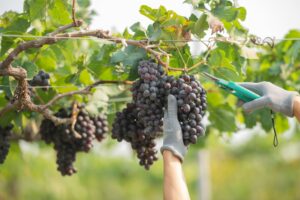
The harvest marks the end of the annual cycle. It can be carried out manually or mechanically depending on the region and production objectives. The harvest date plays a decisive role in the style of the wine. An early harvest will produce fresher, more acidic wines, while a later harvest will produce richer, more concentrated wines.
The long life cycle of the vine
Beyond the annual cycle, vines have remarkable longevity.
Planting and the early years
After planting, vines take around three years to produce a significant harvest. During this period, the root system develops and the structure of the vine is formed.
Full maturity
Between ten and forty years of age, vines generally reach their full production potential. The balance between yield and quality stabilizes.
Aging
Some old vines continue to produce beyond fifty years of age. Although their yield decreases, they can offer particular concentration and aromatic complexity.
The influence of climate on the vine cycle
The vegetative cycle is closely linked to climatic conditions. Temperature, sunshine, rainfall, and extreme events influence each stage.
In recent decades, there has been a trend towards earlier harvest dates in many wine-growing regions. Global warming is gradually altering the balance between sugar and acidity and redefining certain styles of wine. Adapting practices and choosing grape varieties are therefore becoming major challenges in preserving the quality and identity of wine production.
The life cycle of the vine is a complex and rigorous process that extends from winter dormancy to harvest. Each stage—bud break, flowering, fruit set, veraison, and ripening—plays a decisive role in the formation of the grape and the quality of the vintage. Understanding this cycle provides insight into how nature, climate, and human labor interact to produce wine. Behind each bottle lies a precise biological rhythm, repeated year after year, which forms the very foundation of viticulture.
FAQ – The vine’s life cycle
What are the stages in the vine’s life cycle?
The annual life cycle of the vine comprises several successive stages: winter dormancy, bud break in spring, shoot growth, flowering, fruit set, veraison, and then ripening until harvest. Each of these phases influences the yield and quality of the grapes.
When does the vegetative cycle of the vine begin?
The vegetative cycle of the vine begins in spring with bud break, generally between March and April depending on the region. This stage corresponds to the opening of the buds when temperatures remain above approximately 10°C.
How long does the annual cycle of the vine last?
The annual cycle of the vine lasts about eight to nine months, from bud break in spring to harvest in late summer or early fall. The vine then enters dormancy during the winter.
What is vine dormancy?
Dormancy is the vine’s winter rest period. After the leaves fall, physiological activity slows down significantly and the plant stores its reserves in the wood and roots. This phase is essential to prepare for the next cycle.
What is veraison?
Veraison is when the grapes change color and begin to ripen. Sugars accumulate in the berries while acidity gradually decreases. This stage marks the beginning of the final phase before harvest.
At what age does a vine begin to produce grapes?
A vine generally begins to produce a significant harvest from the third year after planting. It reaches its full production potential between ten and forty years.
Why does climate influence the vine cycle?
The vine cycle depends directly on climatic conditions. Temperatures influence bud break and ripening, while frost, rain, or high temperatures can affect flowering and yield. Climate therefore plays a decisive role in the quality of the vintage.
What is the difference between the annual cycle and the long life cycle of the vine?
The annual cycle corresponds to the vegetative stages that repeat each year, from dormancy to harvest. The long life cycle refers to the total lifespan of the vine, from planting to eventual uprooting.